Hittat på websidan:
http://www.navweaps.com/Weapons/Gun_Data.htm
"Blast Bags, Bloomers or Gun Bucklers - Canvas, rubber or neoprene covers around the barrel of a gun where it enters the gun port. Gun ports by their nature represent holes in the glacis plate of a turret. When the guns are fired, these holes can allow overpressure or "blast" to enter the the turret, which can disrupt the operation of the turret and injure the gun crew. These holes may also permit water to enter the mounting. The use of blast bags over the gun ports provide some measure of protection from these hazards. Also see "Gun Port Shield" below."
Bloomers: en sorts damunderkläder .... ahem....
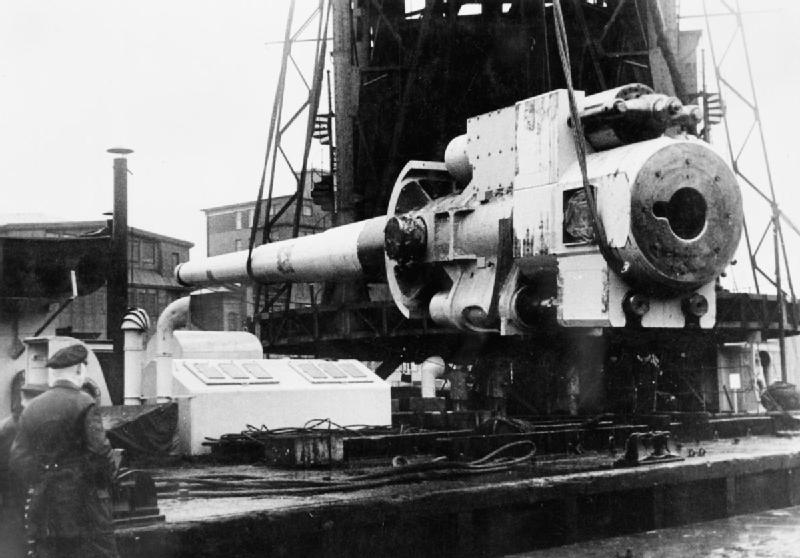
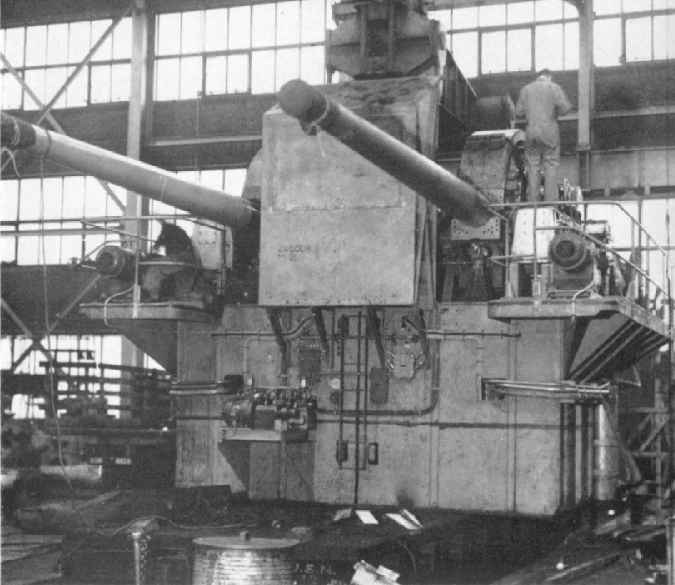
"Gun Port Shield - Curved armor plate attached to a gun barrel such that it seals the gun port in the glacis plate, regardless of the elevation of the gun. Gun ports are by their very nature weak points in the armor protection of a gun mounting or turret. Gun shields seal these openings and are intended to provide at least some measure of protection from shell splinters. In addition, many gun shields are designed so as to keep water and weather out of the interior of the mounting or turret. Some images of gun shields may be seen in these photographs of a USN 6"/47DP and a German 38 cm SK C/34."
38 cm
6-tum
Diverse info: Tryckvågen från huvudartilleriet kan vara mycket kraftig. Det fanns en livsviktig orsak till att luftvärnspjäserna på Yamato hade kupoler/torn ... man ville inte att pjäsbesättningen skulle dödas av tryckvågorna från huvudartilleriet "The blast of the 18,1 inch main gun would blow off anybody's skin wihin 15 meter radius. The AA guns were especially protected against the blast" De 25-mm pjäser som hade öppna placeringar fick utrymmas när huvudartilleriet skulle användas..
Från websidan:
http://www.kbismarck.org/forum/viewtopic.php?f=9&t=1916
nån sorts diskussionsforum verkar det som ...
"Terrific effects were anticipated on numerous installations aboard the Yamato from gun blast.
While the blast of two 16 inch guns simultaneously firing was reckoned at 19.58 pounds/per square inch at a point 5.9 inch from the gun muzzles, that of the Yamato's three 18 inch guns was approximately 58 pounds/ per square inch.
This was an immense figure , since it was believed that the blast pressure of 1.5 pounds per square inch was capable of destroying boats on board the ship and that 6.49 pounds per square inch was capable of tearing the cloths from men and renduring them temporally unconscious.
This meant that nowhere on her weather deck would any boat be safe while her main battery was firing;
AA guns as well as AA machine guns had to be protected by shields from the blast.
Vedette boats, other launches and cutters were to be kept inside the boat hangars which were installed on both sides of the stern.
Ventilators on the weather deck were reduced to a minimum and installed at places where the blast was least effective.
The idea of protecting the AA batteries from the blast by shields, enabling them to fire while the main batteries were in use, greatly restricted the installation anti-aircraft weapons.
After the outbreak of war, however the importance of powerful AA weapons was keenly and later bitterly, realized.
This restriction had to be lifted so that many AA machine guns were installed on the weather deck without a shield to protect them from the blast."
 Men nån sorts teknisk term lär dom väl ha?
 Jag är ny på det marina fältet så all info är kanonkul att lära sig.


